
How to Write Real Estate Listing Descriptions That Sell (With Examples)
Last updated on

When you want your listing to pop, every effort counts. Watching a great home sit on the market is one of the worst feelings in this business. Good quality photos are the first and most important step, but crafting a good description can be the turning point for getting more inquiries from buyers.
If a few minutes of writing could cut days or weeks off your time on market, why wouldn't you do it?
Descriptions are an essential part of the listing and it follows the property everywhere it's presented. From the MLS (Multiple Listing Service) to sites like Zillow and Realtor.com to your own social media. And it often gets syndicated across multiple platforms. On most platforms attention spans are short, buyers (and agents) skim fast, and a description that’s easy to scan gives you an edge.
What Makes a Good Listing Description
After reviewing hundreds of listings, clear patterns stand out. The ones that perform well tend to match how buyers actually read, scan, and decide. Here's what usually sets them apart:
Starts Strong and Earns Attention
A good description should start strong. If the platform allows for a headline, that's your first chance to hook the buyer. Either way, your opening sentences are the ones that carry the most weight. On many platforms, the first line or two is all that shows in search results or previews. If that snippet is vague or too technical, buyers might scroll past before seeing the rest.
Another common mistake is overhyping the opening. When every sentence is packed with words like "stunning" or "amazing," none of them stick. Adjectives are fine, but too many of them make the description feel like a sales pitch instead of an honest take on the property.
Is Tailored to the Platform
Not every platform works the same way. Character limits vary, and the same text can display differently depending on where it ends up.
Some listing sites have dedicated fields for information like beds, baths, and square footage. If that is already visible elsewhere on the page, you don't need to repeat it word for word in your description. Use the space for something more useful.
Another thing to mind is how tone can shift in social media posts. Emojis, shorter lines, a more casual voice. None of that is unprofessional there. It's just how people scroll and read.
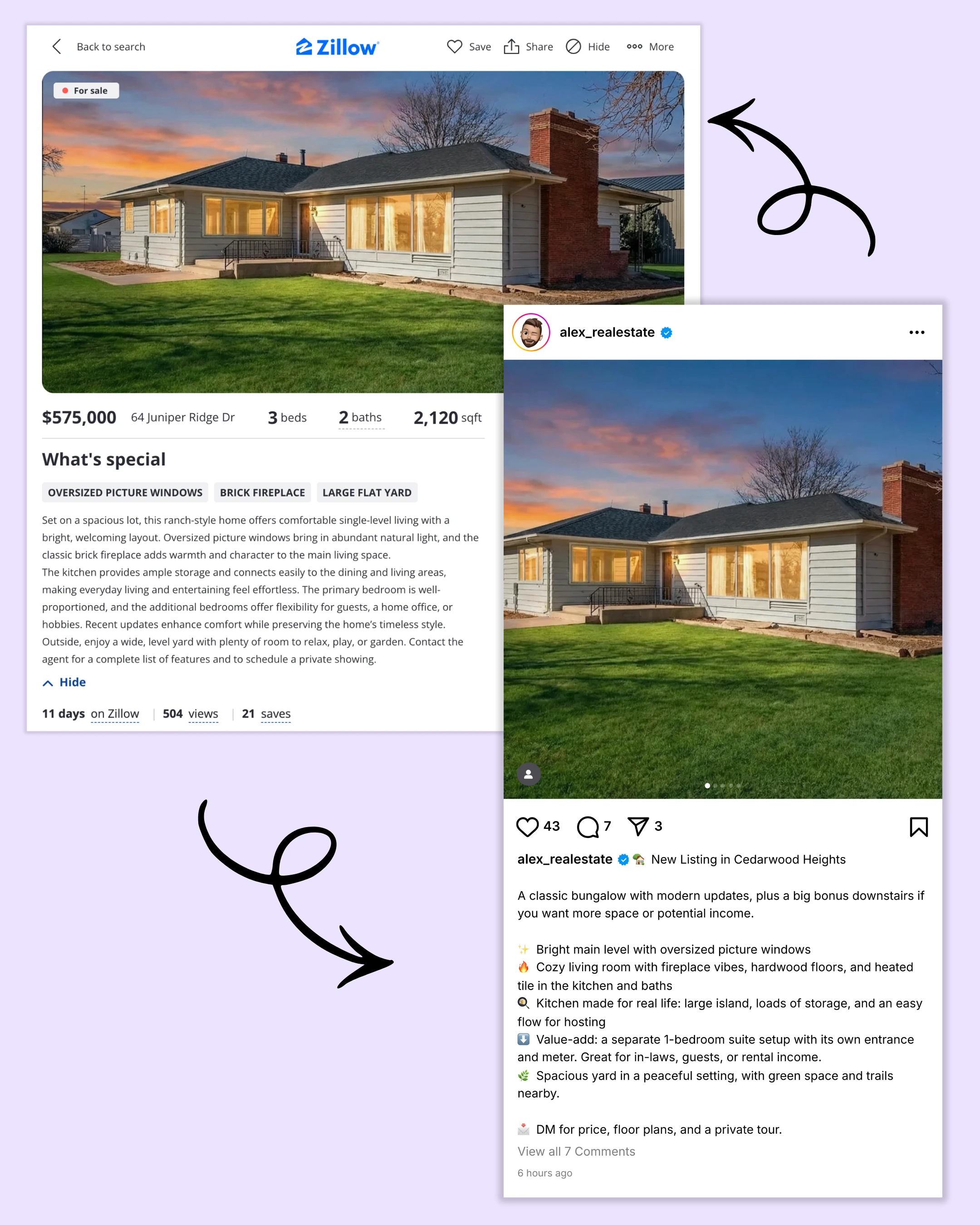
The point isn't to write one description and paste it everywhere. It's to know where it's going and adjust.
Highlights What Makes This Property Different
It sounds obvious, but it's easy to forget: mention what makes this specific property stand out. Not generic features every house has, but the things a buyer would actually remember.
Here's a non-exhaustive list of things buyers tend to notice:
- Anything unusual for the price range (a high-end kitchen in a mid-range home stands out more than in a luxury one)
- Recent upgrades that matter: new roof, HVAC, electrical, windows. Not just fresh paint.
- Outdoor space: private garden, deck, patio, mature trees.
- Smart home features: thermostats, locks, video doorbells.
- Community amenities if you're in a condo or subdivision: pool, gym, dog park.
- Walkable access to parks, shops, or restaurants.
- Proximity to public transit, especially in urban areas.
Agents also consistently see strong buyer demand for practical improvements like roofing and kitchen upgrades (see the NAR Remodeling Impact Report).
That said, you don’t need to list everything. Pick the few that matter most for this property and the kind of buyer you’re trying to reach.
Sells the Experience, Not Just the Features
A list of features tells buyers what the house has. A good description helps them picture living there.
Instead of just "large backyard," you could say "room for a garden, a firepit, or space for kids to run around." Instead of "open kitchen," try "kitchen where you can cook and still be part of the conversation."
The words you choose depend on who you're writing for. A young couple might respond to "perfect for weekend dinner parties." A family might connect with "plenty of room to grow." Similar house, different angle.
You're not trying to manipulate anyone. You're just helping buyers see what life in that home could look like.
Designed to Drive Showings and Inquiries
Your description shouldn't just inform. It should nudge the reader to take the next step.
End with something that invites action. "Schedule a showing before it's gone." "Reach out to book a private tour." "Open house this Saturday - come see it for yourself." Nothing pushy, just a clear signal that they can move forward if they're interested.
It sounds small, but it matters. Once someone finishes reading, they're either going to act or move on. A clear closing line gives them that nudge to reach out instead of bookmarking it and forgetting.
Stays Honest
Don't hide behind too many euphemisms. Buyers will notice, and it might put them off before they even reach out.
Lying or leaving out problems doesn't help either. When a buyer shows up and the property doesn't match what they expected, that frustration kills the deal.
If the property has flaws, be upfront. Frame them constructively, maybe even with a bit of humor.
Is Easy to Read
Keep the language simple. Not every buyer knows real estate jargon, and technical terms can make people feel like the listing isn't for them. If a simpler word works, use it.
Another thing to avoid is all caps and excessive exclamation points. It reads like shouting, not enthusiasm.
And proofread before you post. Typos and grammar mistakes make the listing feel rushed. If the description is careless, buyers might wonder what else was overlooked.
A Proven Structure
Here's a structure that covers the essentials. It's flexible enough to adapt, but it'll keep your descriptions consistent and effective.
Headline
Not every platform has a headline field, but when it does, use it. This is your first chance to grab attention, so make it count. Keep it short. Focus on what makes the property stand out and where it's located. A good headline pairs the location with one or two key features.
Examples:
- "Renovated 3-bed in Riverside with private garden and modern finishes"
- "Bright corner loft in downtown with skyline views"
- "Spacious family home in Maplewood, steps from top-rated schools"
- "Move-in ready condo in Lakewood with balcony and parking"
Avoid generic headlines like "Beautiful home for sale" or "Must see!" They don't tell the buyer anything useful.
Opening Sentences
The opening should give the buyer a clear picture of the property and a reason to keep reading. Start with the important information. By the end of the first paragraph, they should already know what this place is about.
If the headline couldn't fit everything important, this is where you add it: parking in a city listing, a recently renovated kitchen, or a private backyard. Whatever makes this property worth a closer look.
You can also start pulling the reader in here. Phrases that help them imagine being in the space work well. "Step into..." or "From the front porch, you'll see..." help ground people and get them picturing the home.
Body of Description
This is the main content of your description. Walk the reader through the key parts of the home, highlight what makes it worth seeing, and give them a sense of what living there would feel like.
Cover the main features: layout, size, condition, recent upgrades. If beds, baths, and square footage are already shown elsewhere on the page, you don't need to repeat them here.
Don't just list things. Guide the reader through the property as if you were walking them through it. You can keep paragraphs short or use bullet points if the platform supports them.
And don't forget the neighborhood. If the location has selling points, like good schools, parks nearby, or walkable streets, mention them. For some buyers, that's just as important as the house itself.
Call to Action
End with a clear next step. "Schedule a showing today." "Reach out to book a private tour." "Open house this Saturday." Something simple that tells the reader what to do if they're interested.
Real Estate Listing Description Examples
Here are a few examples showing the structure in action, written for different contexts.
Listing Portal Examples
This style works for MLS, Zillow, Realtor.com, and similar platforms.
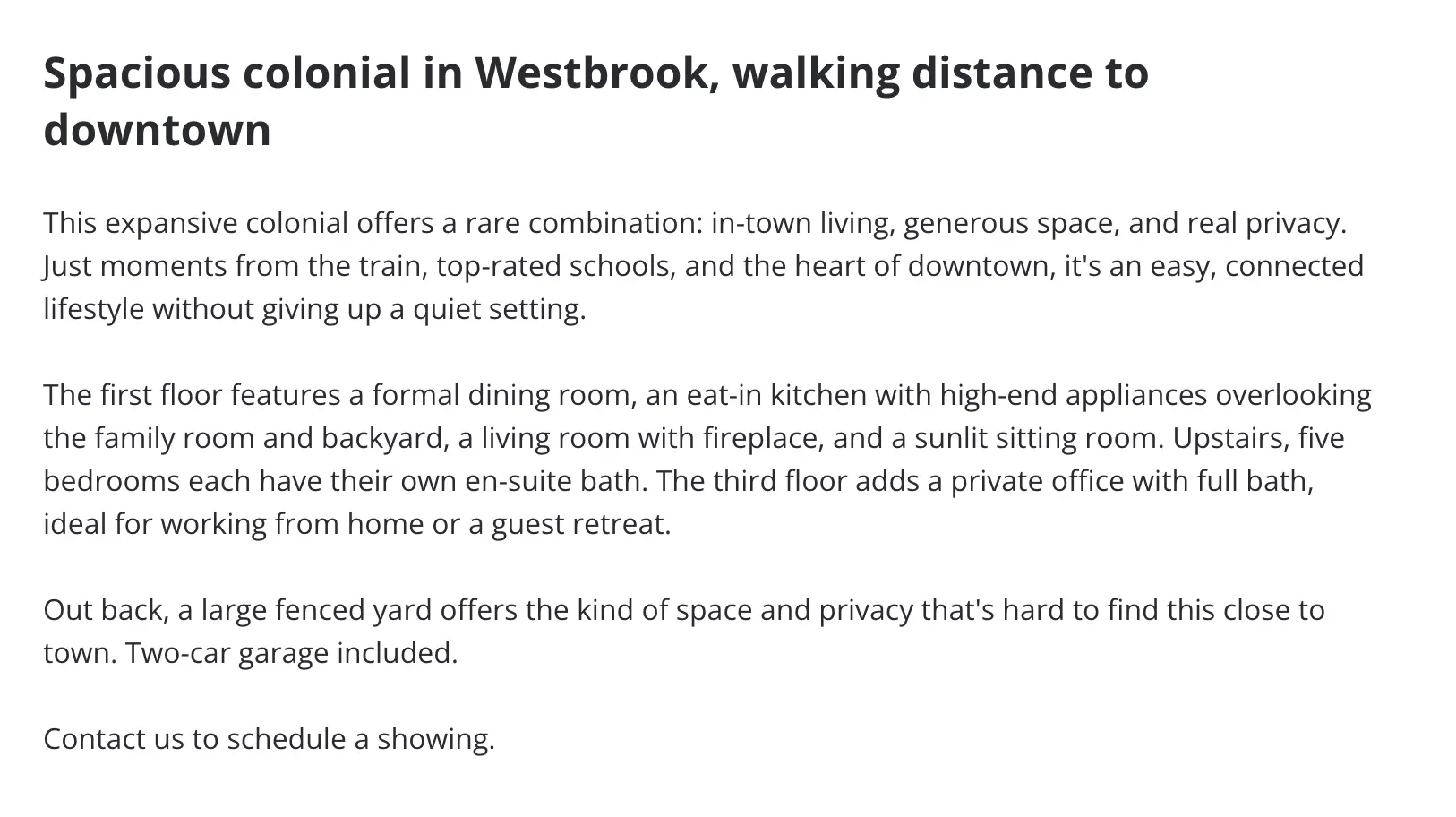
Example of a portal-style listing description (MLS / Zillow / Realtor.com tone).
Social Media Listing Description Example
This example is written for Instagram or Facebook. Notice the emojis, casual tone, and shorter lines.
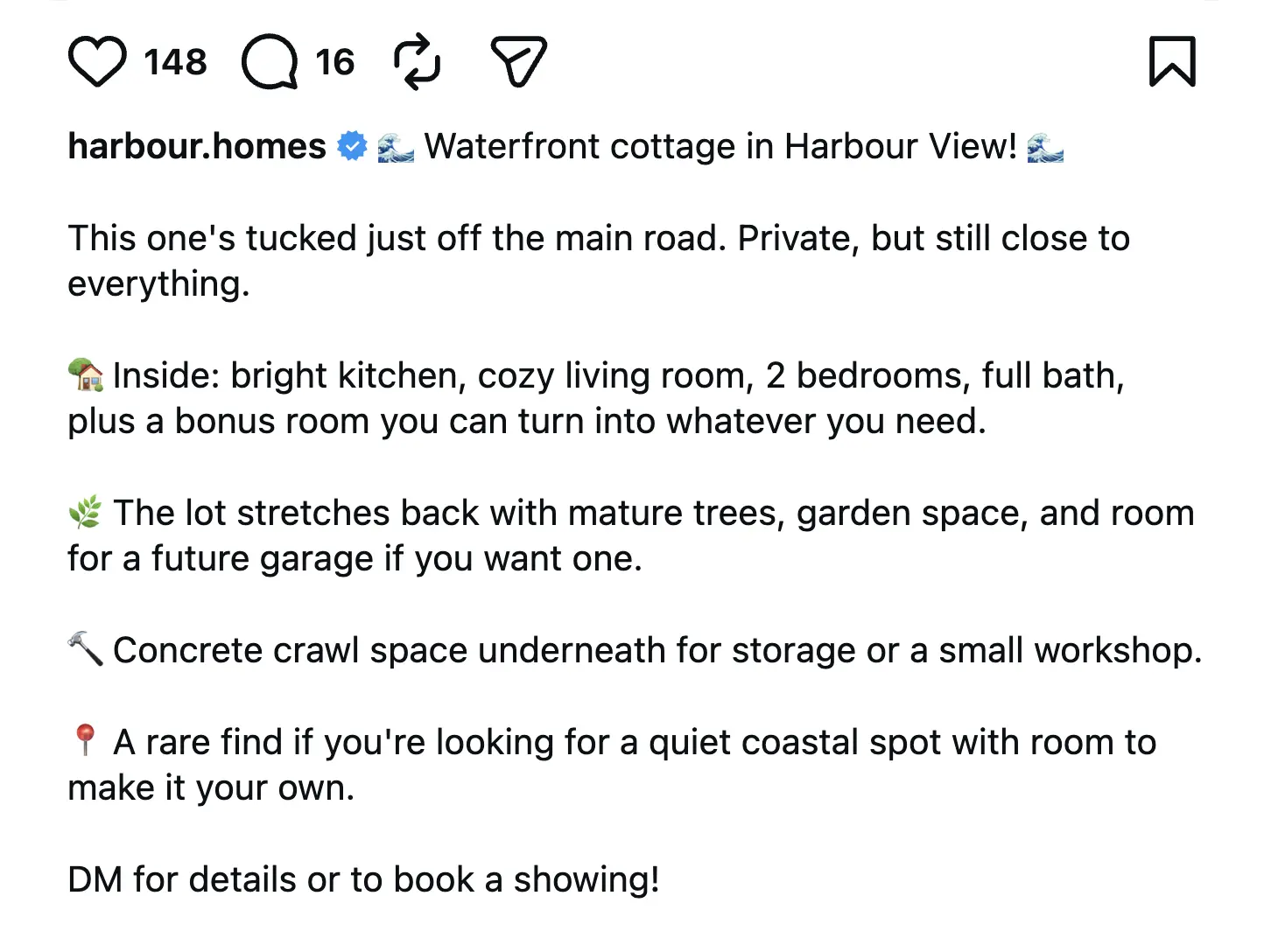
Example of a social-style listing caption (Instagram / Facebook tone).
Fixer-Upper Listing Description Example
This example is for a property that needs work. It shows how to be upfront about the flaws while still highlighting what makes it worth considering.
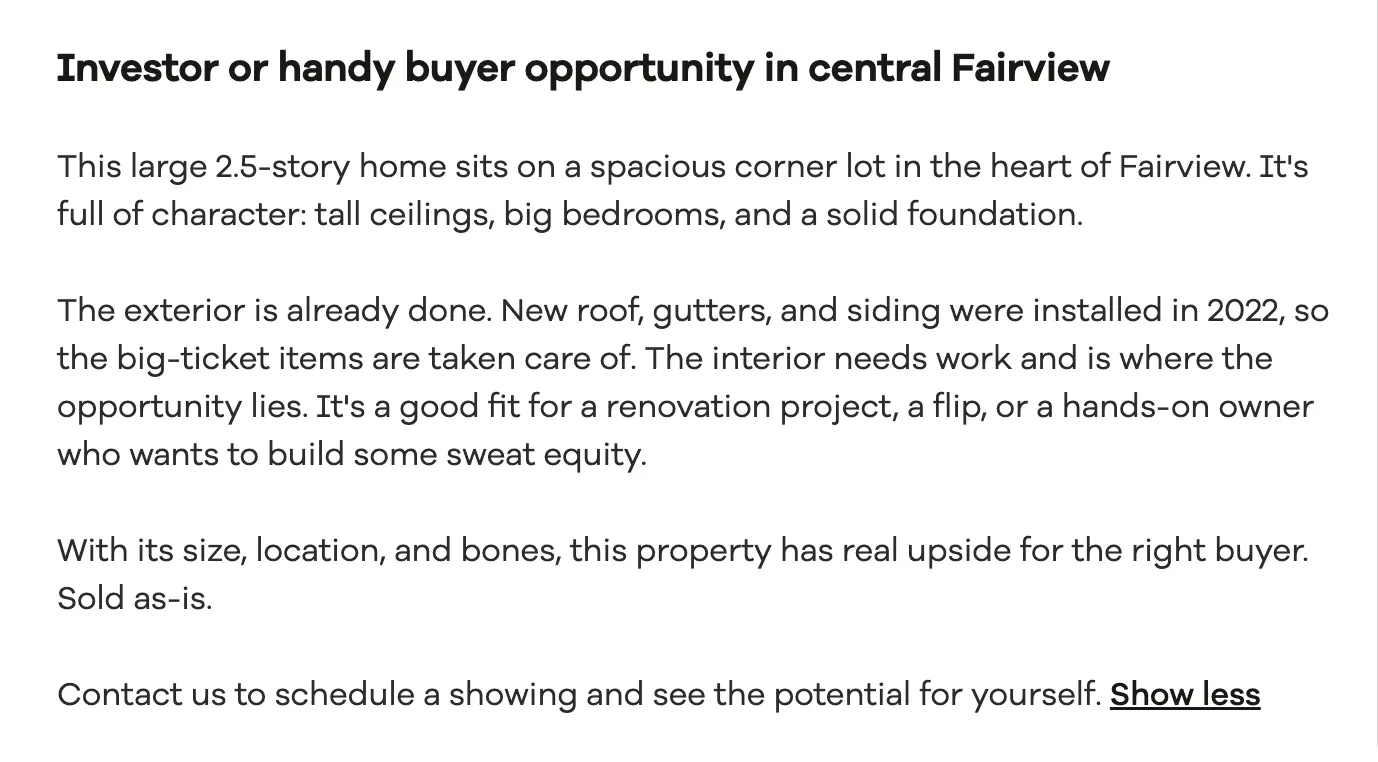
Example of a fixer-upper / as-is listing description (portal-style layout).
How to Use AI for Listing Descriptions
AI is a valuable ally that can speed up your writing, keep descriptions consistent, and help when you're stuck staring at a blank page. But it's a starting point, not the final product. Always review the output and add your own touch.
General AI Tools
Tools like ChatGPT can write listing descriptions in seconds. The catch: the quality depends on your prompt. Without specifics, the result can feel generic or accidentally cross into language that violates MLS or fair housing rules. For many agents, it's a lot of trial and error.
Give It the Right Inputs
Whatever you use, don't start with "write a listing description" and expect it to understand the property. Give it the same details you would give a copywriter: location, property type, standout upgrades, target buyer, platform, length, and anything you want to avoid.
Then edit it like a draft. Remove claims you can't verify, tone down anything that sounds too salesy, and add the specifics that only someone who knows the property would catch.
If you want a starting point built around listing copy, try the Free Listing Description Generator for Real Estate.
The Full Picture
A strong description only works if the photos back it up. If your description paints a picture of a bright, spacious living room, the photos should confirm that. Buyers scroll through photos first, and if they don't match the story, they move on.
Before publishing, look at the gallery beside the description. Crop distractions, fix lighting where it needs fixing, lead with the strongest images, and make sure the rooms you mention are easy to find. If you've put effort into writing a great description, it's worth making sure your visuals tell the same story.