
6 Best Sites For Free Real Estate Stock Photos & Images in 2026
Last updated on
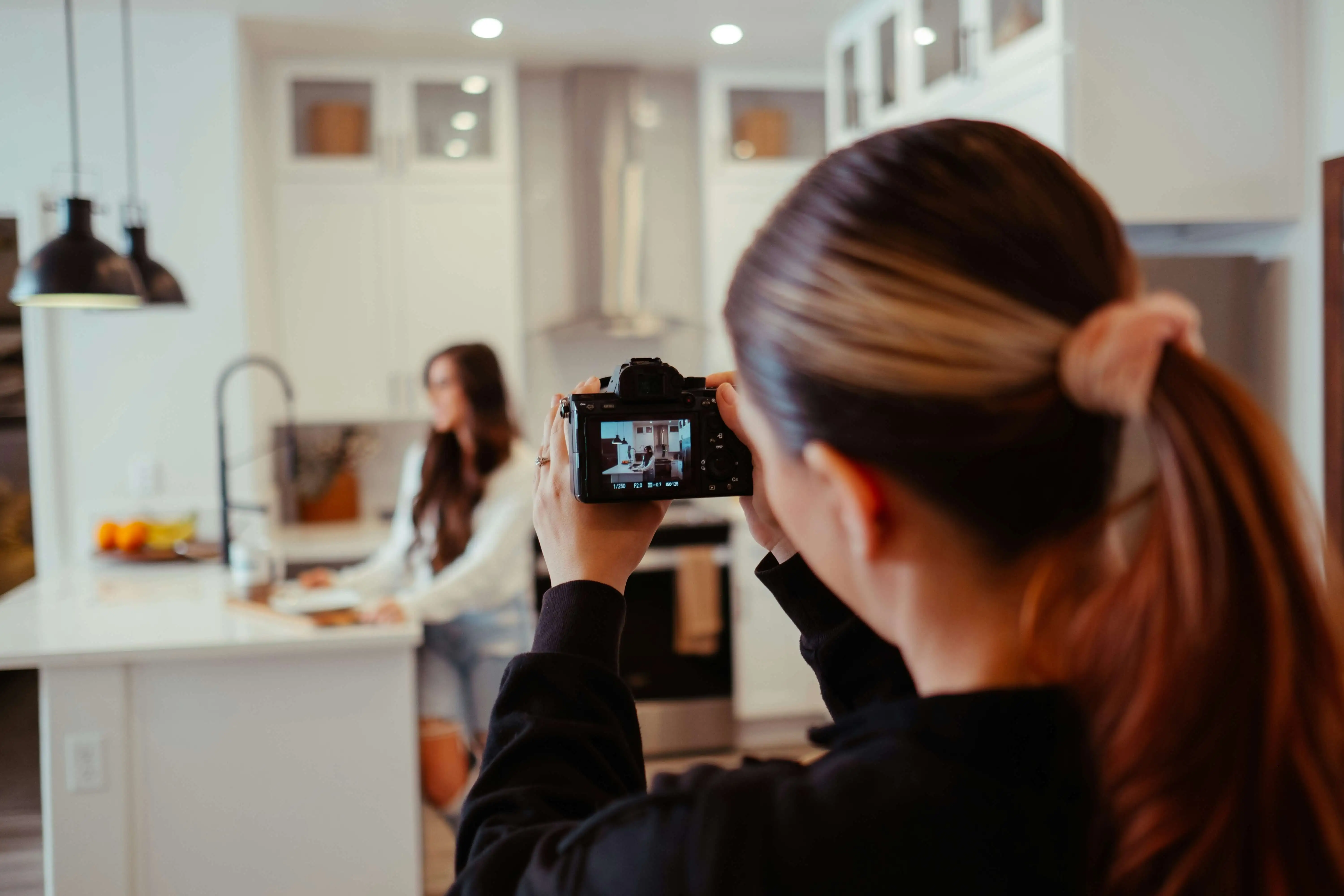
Real estate marketing needs a steady supply of visuals. Blog posts, social media updates, flyers, newsletters, ads, and website pages all look better when the image feels polished and relevant.
Free real estate stock photos can help, but only if you choose carefully. Some images look too generic for a realtor brand, and some "free" licenses still come with limits around commercial use.
This guide covers the best places to find real estate stock photos and images, plus what to check before using them in your marketing.
Best Free Real Estate Stock Photo Sites
Unsplash
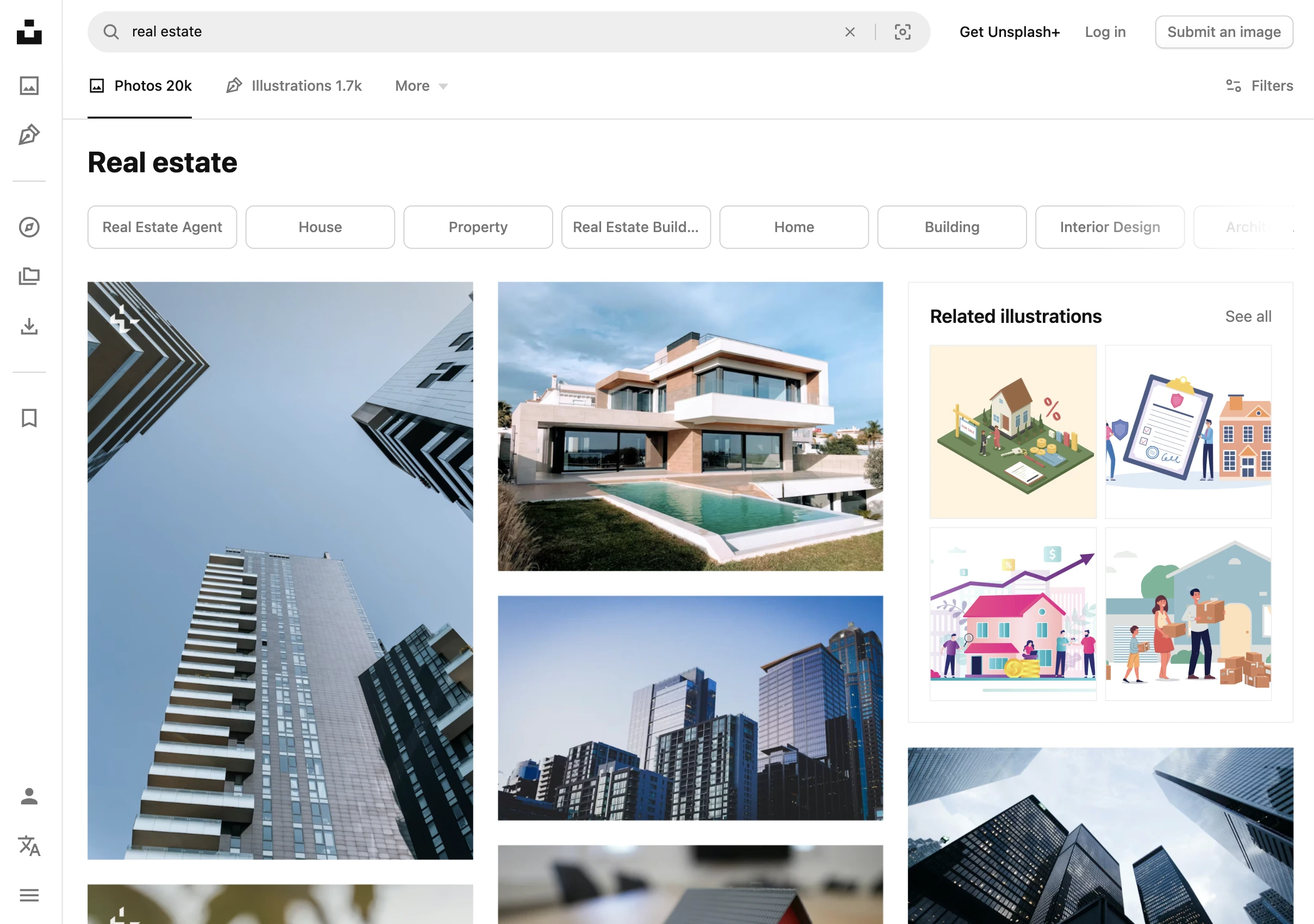
Unsplash is one of the easiest places to start for free real estate stock photos. The library is large and the image quality is strong. The suggested search categories make it easy to move from a broad search like "real estate" into more specific ideas. You can also find illustrations and vectors alongside photos for posts, guides, and website visuals.
Because Unsplash is popular, some images can feel generic or overused if you choose from the first page of search results. More specific searches usually give you better options.
License: Unsplash images can be downloaded and used for free for commercial and non-commercial purposes. No permission is needed, and attribution is appreciated but not required.
Pexels
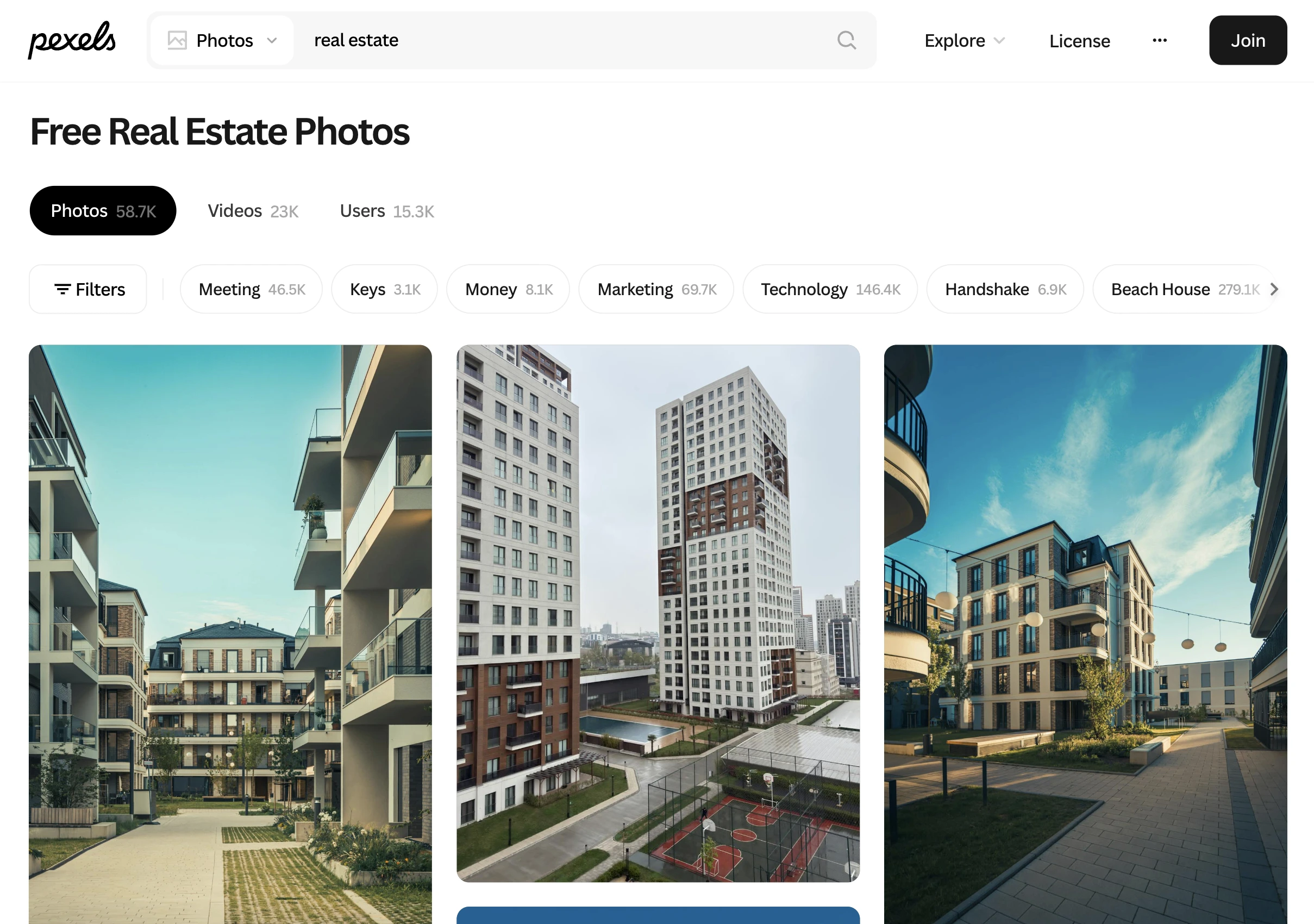
Pexels is another great source for free real estate stock photos. The library is large and the search results are easy to scan. It also includes free stock videos, which can be useful as video becomes a bigger part of real estate marketing.
The real estate results can be broad, so it helps to try a few related searches, like "home interior," "house exterior," "moving," or "real estate agent," to find images that feel specific enough for the piece you are creating.
License: Pexels photos and videos are free to use for commercial and non-commercial purposes. Attribution is not required, and you can modify the visuals, but avoid using identifiable people or brands in a way that implies endorsement.
Pixabay
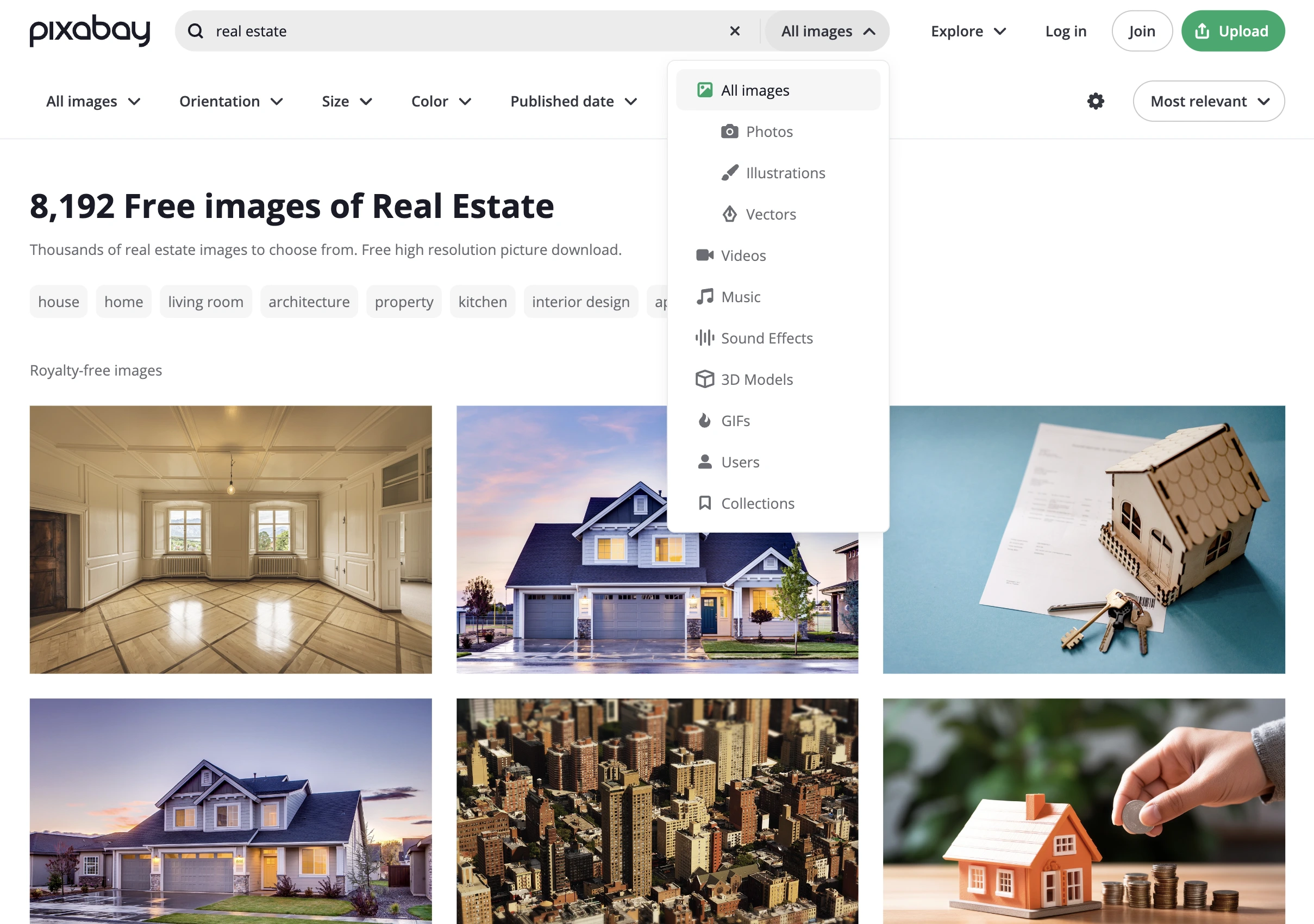
Pixabay is useful because it goes beyond photos. You can find AI-generated images, vectors, illustrations, videos, and even audio, which gives you more asset types to work with in one place.
The real estate library is smaller than what you will find on Unsplash or Pexels, so Pixabay works better as an extra place to check than as your only source.
License: Pixabay content can be used for free without attribution, and you can modify it. Avoid using recognizable people, brands, or logos in misleading ways or as if they endorse your business.
Canva

Canva is not just a stock photo site. Its biggest advantage is that you can choose an image and turn it into a finished social post, flyer, postcard, blog graphic, or ad in the same editor. It also includes real estate templates and simple graphics, which can save time if you are building the final piece yourself.
The stock photo selection is not as deep as dedicated image libraries, so Canva works best when you care as much about editing and layout as you do about finding the original image.
License: Canva licenses assets piece by piece. You can use free assets inside exported Canva designs, but check whether each image, template, or graphic is Free, Pro, branded, or restricted before using it in commercial marketing.
ChatGPT
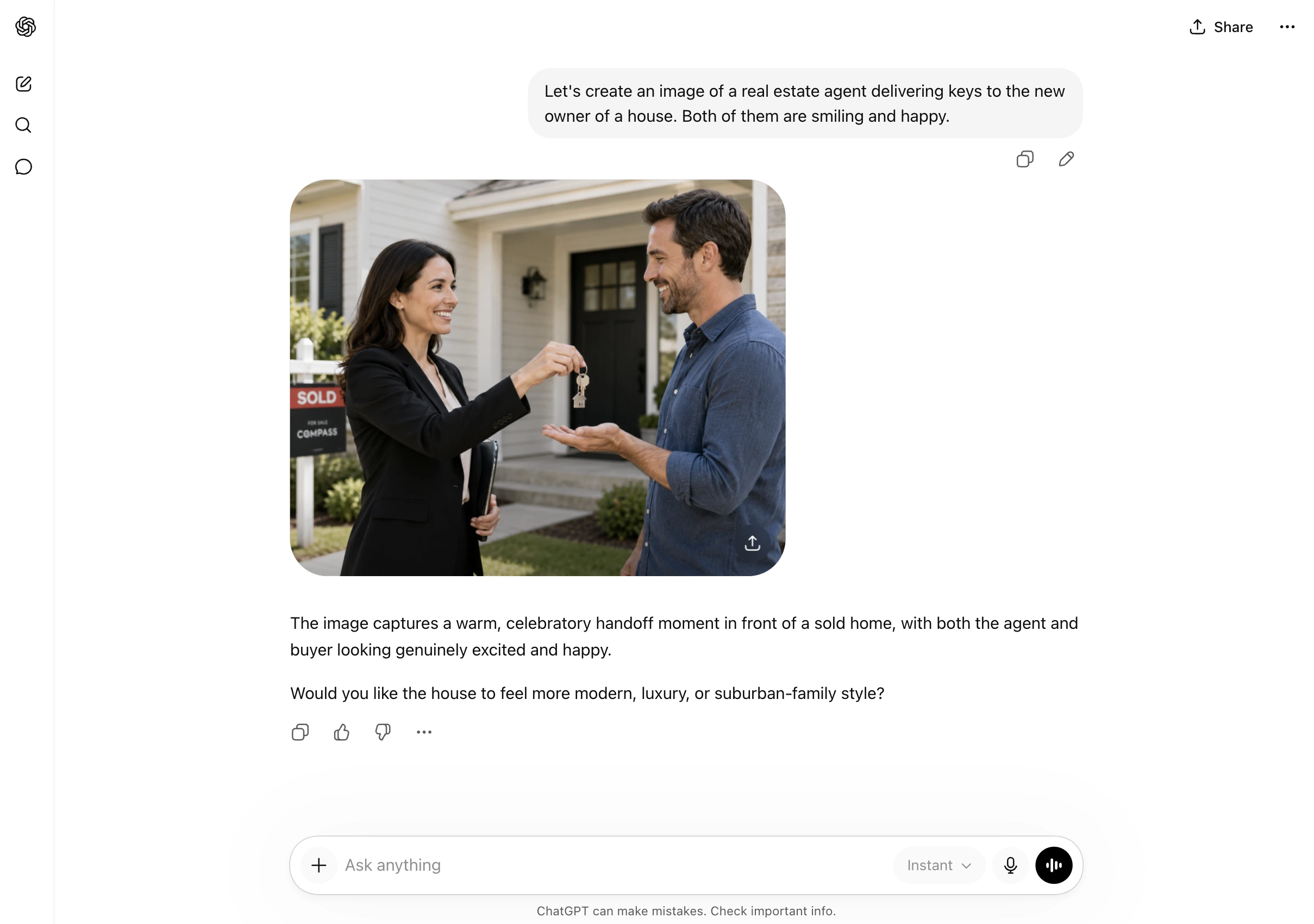
ChatGPT is different from the stock photo sites above because you are generating the image instead of searching for one. That can help when you need a specific style, setting, or composition and do not want to browse through pages of similar stock photos.
The tradeoff is that every image needs a closer review. AI-generated visuals can look polished at first glance but still get details wrong, so avoid using them for anything that should represent a real property, real client, or real brand.
License: OpenAI says you own the output you create with ChatGPT and can use it commercially, even on free plans. Your use still needs to follow OpenAI's terms and policies.
Gemini

Gemini by Google is another option for creating images instead of searching through a stock library. It can be useful when you want a custom visual direction, a cleaner composition, or a specific scene that is hard to find in existing stock photos.
The catch is presentation. Images generated in the Gemini app on free plans can include a visible Gemini watermark, which may make them less useful for polished marketing pieces.
License: Gemini image generation can be used for free within usage limits, but your use needs to follow Google's Generative AI Prohibited Use Policy. Check each image before using it commercially, especially if it includes people, brands, logos, or anything that could be mistaken for a real property or real business.
How to Choose and Use Real Estate Stock Photos
The best stock photo is not always the most polished one. It is the one that fits the piece without making your marketing look like everyone else's. A few quick checks before downloading:
- Does it match the tone of your brand and market?
- Is there enough empty space for text if needed?
- Are recognizable people, signs, or logos visible?
- Has the same image appeared everywhere already?
Specific searches work better than broad ones. Instead of "real estate," try "modern home exterior," "home office," "open house," or "real estate agent meeting." Once you have an image, a small edit goes a long way. A brand color overlay, your logo, or a simple crop for vertical formats makes a stock photo feel intentional rather than borrowed.
Stock Photos vs. AI-Generated Images for Real Estate
Stock photos are still the easiest choice when a good image already exists. They are fast to find, easy to compare, and often look more natural when you need a common scene like a home exterior, interior detail, moving box, or agent working at a laptop.
AI-generated images are better when you need something more specific. If you want a certain composition, color palette, room style, or abstract real estate concept, tools like ChatGPT and Gemini can create a custom image instead of forcing you to settle for the closest stock result. Both tools can also edit an existing stock photo which is useful if you found a good image that just needs a small fix.
The same rule applies either way: review the image before using it. Stock photos can feel staged or overused. AI images can look realistic but still include strange details, inaccurate text, or objects that do not quite make sense.
Build Your Own Local Photo Library
The best real estate stock photos are often the ones you make yourself. Modern phones are good enough for many marketing uses, especially if you are capturing neighborhood streets, local parks, coffee shops, building details, signs, or small lifestyle moments around your market.
Those images will match your service area in a way generic stock photos cannot. If you work in a specific city, suburb, or neighborhood, showing the actual region makes your content feel more grounded and more relevant to the people you want to reach.
If photography is not your strength, bring in someone who already knows how to shoot real estate and local spaces well. A photographer can help create a more consistent library of street views, exterior details, neighborhood scenes, and local lifestyle images. Over time, that gives you a bank of visuals that feels specific to your market instead of borrowed from somewhere else.
When Not to Use Real Estate Stock Photos
Stock photos are useful for supporting content, but they should not replace the images that make your business specific.
Do not use stock photos to represent a real listing, a real client, a real testimonial, or a real result. If the content is about a property you are marketing, use the actual property photos and videos. If the content is about your team, office, neighborhood, or client experience, real images will usually build more trust than a polished generic photo.
The best use of real estate stock photos is around the edges of your marketing: blog graphics, educational posts, newsletters, ads, guides, and website sections where the image supports the message. For anything that depends on proof, credibility, or local presence, use real visuals whenever you can.
Used that way, stock photos and AI-generated images can make your marketing easier to produce without making it feel fake.